Meet the History Center’s incoming president and CEO
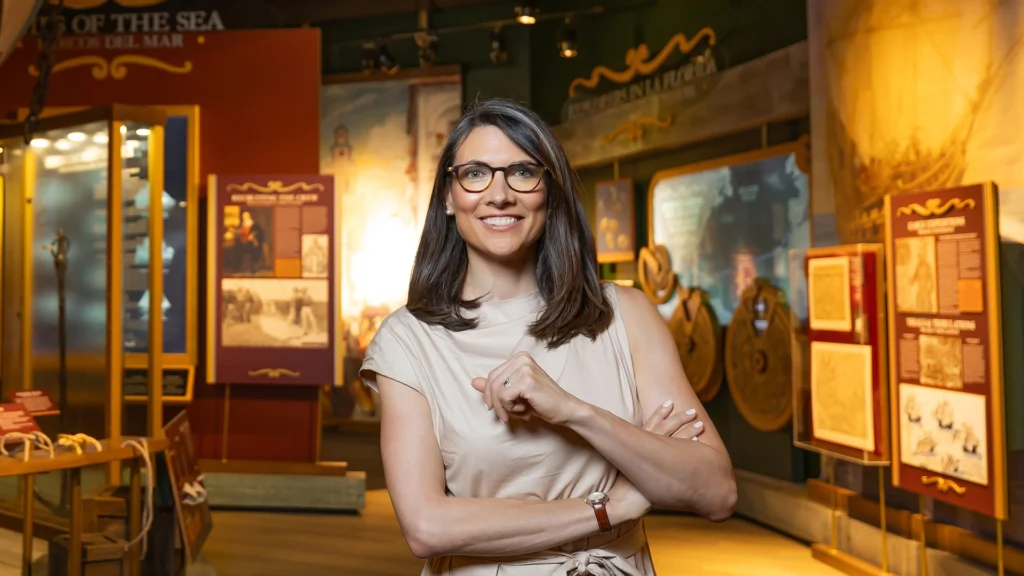
After a rigorous international search and a unanimous vote of confidence from the Board of Trustees, the Tampa Bay History Center has named Audrey Chapuis as its next President and Chief Executive Officer.
Chapuis has served as Executive Director of the American Library in Paris, the largest English-language lending library on the European continent. Her career has been shaped by service to cultural institutions, leadership in public-facing scholarship, and a commitment to preserving collective memory. Chapuis holds an Executive MBA from HEC Paris with a concentration in digital transformation, as well as a Master’s in Library and Information Science from the University of Illinois Urbana-Champaign.
She has spent her professional life at the intersection of civic institutions, cultural policy, and educational leadership. This background provides her with an understanding of how museums and libraries function not only as repositories of knowledge but also as active participants in the life of a city.
We spoke with her about leadership, education, and the role of history in civic life.
Q&A with Audrey Chapuis
Hi, Audrey. We are really excited that you have joined the Tampa Bay History Center. Looking back at your academic and professional path, what experiences most shaped your leadership style?
Audrey: I’ve been lucky to have worked alongside some truly exceptional thought leaders throughout my career, and I’ve been shaped as much by their example as by the teams I’ve led at Northwestern and at the American Library in Paris, and by the diverse communities I’ve served over the years. They’ve taught me that a leader’s real job is to build the kind of environment in which everyone flourishes and can bring their best ideas and best selves. A good leader creates an ecosystem in which trust runs deep so that the team can come together to execute our shared purpose. In the nonprofit sector, we are fortunate to have a clear mission driving us. And I’m a firm believer in the power of harnessing our collective intelligence to move mission forward. In every institution I’ve served, I’ve seen time and time again how bringing many minds together can illuminate paths none of us could have found alone.
Education is central to the History Center’s mission of connecting people with the past. Tell me about your philosophy on how we teach and preserve history for the community within museums and cultural institutions.
Audrey: We see today that learners are no longer passive. We want to be moved, engaged, and inspired! People remember that which activates their senses and sparks their emotions. I believe that learning should be an active and joyful process, one that invites people to participate rather than simply observe. History can truly come to life this way. Walking through the History Center, I see children’s imaginations ignite as they interact with our exhibits. This is learning as play, and it works for learners at every age. Storytelling, movement, and sensory connection make history immediate and alive. It is experiential. At its best, education transforms curiosity into a renewable force, one that continually fuels wonder and lifelong learning.
The Tampa Bay area is growing and evolving quickly. What do you hope the History Center’s presence and programming will impress upon the region in the years ahead?
Audrey: The History Center is already the beating heart of the Tampa Bay community, and my hope is to continue building on that extraordinary legacy of storytelling, scholarship, and civic pride. Tampa Bay is indeed growing and evolving in such exciting ways — there’s this incredible mix of history, innovation, and civic spirit that gives the region its pulse. I’ve lived in many places, but I’ve rarely seen this kind of pride and cohesion in action; it’s inspiring! I want the Center to continue being a place where people see their own stories reflected and understand that history isn’t something preserved behind glass — it’s something we’re all still shaping together, right here, right now.
The Tampa Bay History Center has built a loyal community around its longstanding traditions and programs. We’re in a digital-first, always-on era. How do museums connect with the communities they serve?
Audrey: In a digital-first world, museums connect best by staying deeply human. Technology gives us incredible new ways to share stories, but connection still begins with curiosity and a sense of belonging. We’re rooted right here in Tampa Bay, yet our audience is increasingly global — and that’s such an exciting opportunity. As Tampa’s tourism and cultural landscape continue to grow, we can welcome more people into the story of this region and help them see what makes it so special. The History Center is a natural gateway to Tampa’s many layers — from the waterfront to Ybor City — and our partnerships with schools, universities, and cultural organizations make that connection even richer. Whether it’s through digital storytelling, podcasts, or immersive new technologies, our goal is simple: to meet people where they are and invite them into the living, evolving story of Tampa Bay.
Beyond your professional life, how do you recharge, and what sources of inspiration most influence the way you lead?
Audrey: As someone who has spent a career in cultural organizations and libraries you won’t be surprised to hear that I enjoy both reading and taking part in all the cultural offerings of my community. I love exploring neighborhoods, visiting museums, and simply talking with people in the community. I can’t wait to discover all the places that make Tampa Bay so vibrant and creative. And on my bookshelf, you’ll see a lot of works on history, biography, cognitive science, and performance, which continually feed into my leadership philosophy. I’m a big proponent of continuous growth and improvement through reflection and incremental change.
As you begin this new chapter, what excites you most about leading the History Center, and what do you hope museum-goers will take with them after they visit us on Water Street?
Audrey: What excites me most is helping people feel that sense of wonder — the moment you realize history isn’t distant or abstract, it’s yours. The History Center connects Tampa Bay’s stories to the great human themes of resilience, creativity, and belonging. Whether you’re a lifelong local or a first-time visitor, I hope you leave with a feeling of connection — to this region, to one another, and to the idea that our shared story is still unfolding. Tampa Bay’s past and future are both full of possibility, and it’s an honor to help tell that story alongside a community that cares so deeply about it.
The future of stewardship for the History Center
The Tampa Bay History Center has always stood at the crossroads of scholarship and public service. Under the leadership of Audrey Chapuis, that mission will be extended into a new chapter. Her career reflects a belief that cultural institutions must safeguard history while also shaping the civic conversations of the present.
Chapuis inherited a History Center respected for its stewardship of the past and its service to the Tampa Bay community. The task before her is one of both preservation and charting the museum’s next course. With her leadership, the History Center will share more of Florida’s stories, spark conversations with our community, and remind us why museums matter in civic life.
About the Tampa Bay History Center
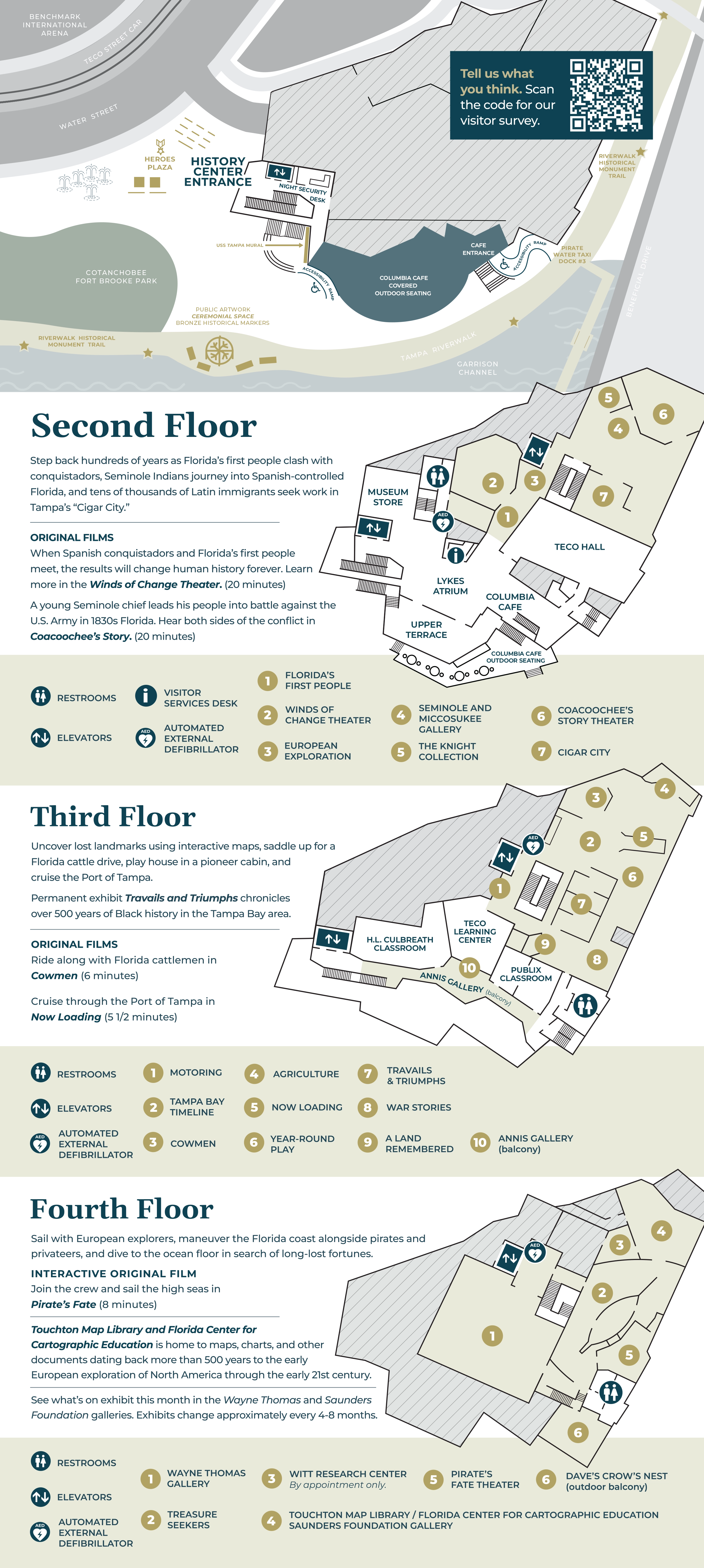
Located on Tampa’s Water Street, the Tampa Bay History Center offers three floors of exhibits that highlight 12,000 years of Florida’s history and culture. Accredited by the American Alliance of Museums and a Smithsonian Affiliate, the center features the Touchton Map Library and Florida Center for Cartographic Education, as well as the Witt Research Center. The History Center is also home to the Columbia Cafe. Known as one of Tampa’s premier cultural venues, it provides interactive, hands-on exhibits and theaters that offer an engaging and educational experience for visitors of all ages.

About the Author
Sara Cheesewright serves as Digital Marketing Associate at the Tampa Bay History Center. She holds a Master of Arts from St. John’s University and brings more than five years of editorial expertise to her work. As a lifelong storyteller, she is deeply...