
Long-lost cutter, local memory and mural outside our door
The wreckage of the U.S. Coast Guard Cutter Tampa, lost with all hands during World War I, has been located off the coast of Cornwall in the United Kingdom, the U.S. Coast Guard announced April 29, 2026.
The discovery was confirmed by the British technical diving team Gasperados, which found the wreck about 50 miles off Newquay, Cornwall, at a depth of more than 300 feet in the Atlantic Ocean. According to the Coast Guard, the cutter sank in 1918 after being torpedoed by a German submarine in the Bristol Channel. All 131 people aboard were killed, including 111 Coast Guardsmen, four U.S. Navy personnel, and 16 British Navy personnel and civilians. It remains the largest single American naval combat loss of life in World War I.
“The sinking of the Coast Guard Cutter Tampa during World War I resulted in the largest American naval combat loss of the war,” said historian Rodney Kite-Powell. “The exact location of the Tampa’s final resting place has been unknown until now. Though too late for the immediate family members of those lost on the Tampa, this discovery provides a sense of closure to the descendants of the ship’s crew and its passengers as well as to the city that gave the ship her name.”
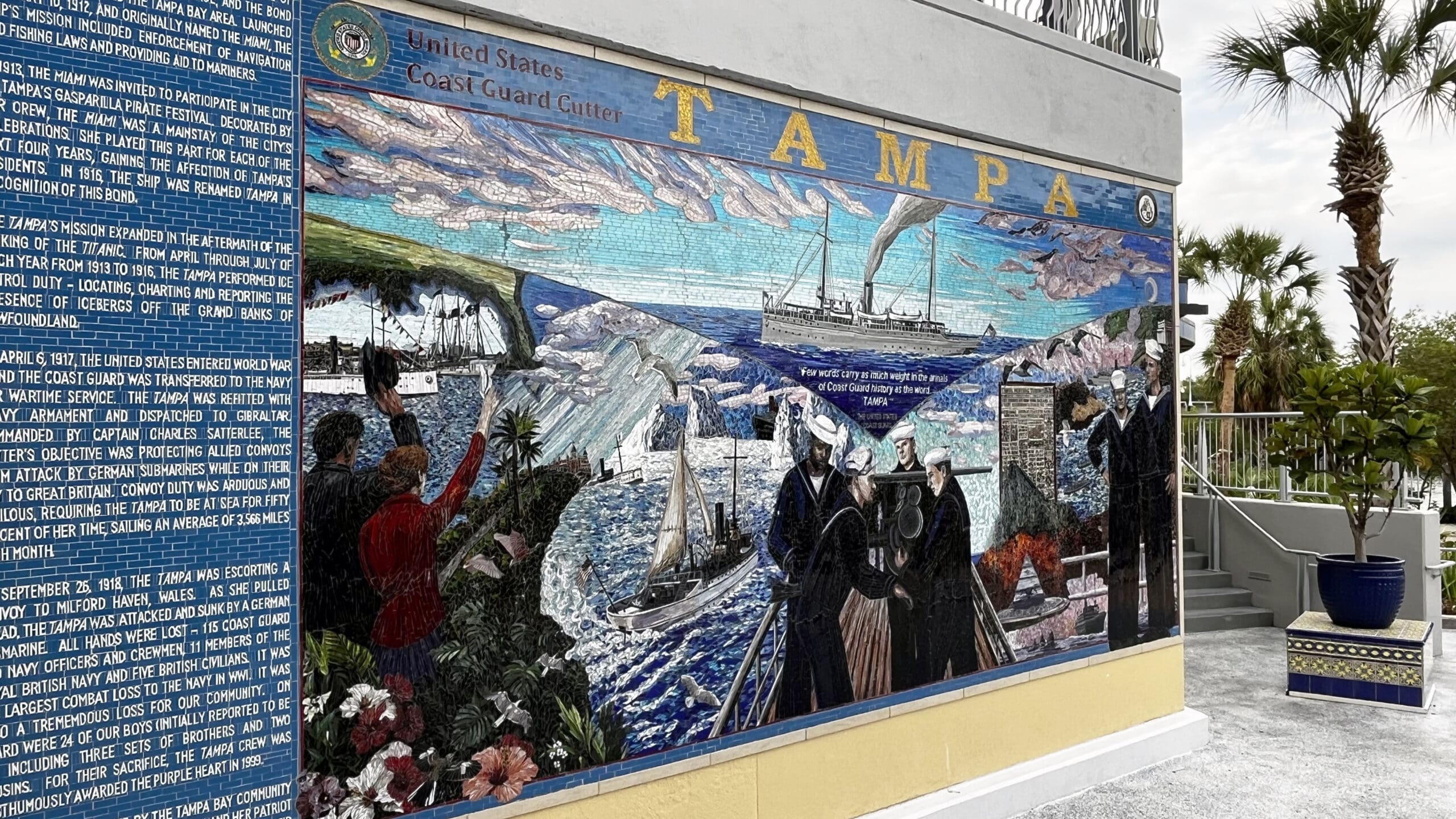
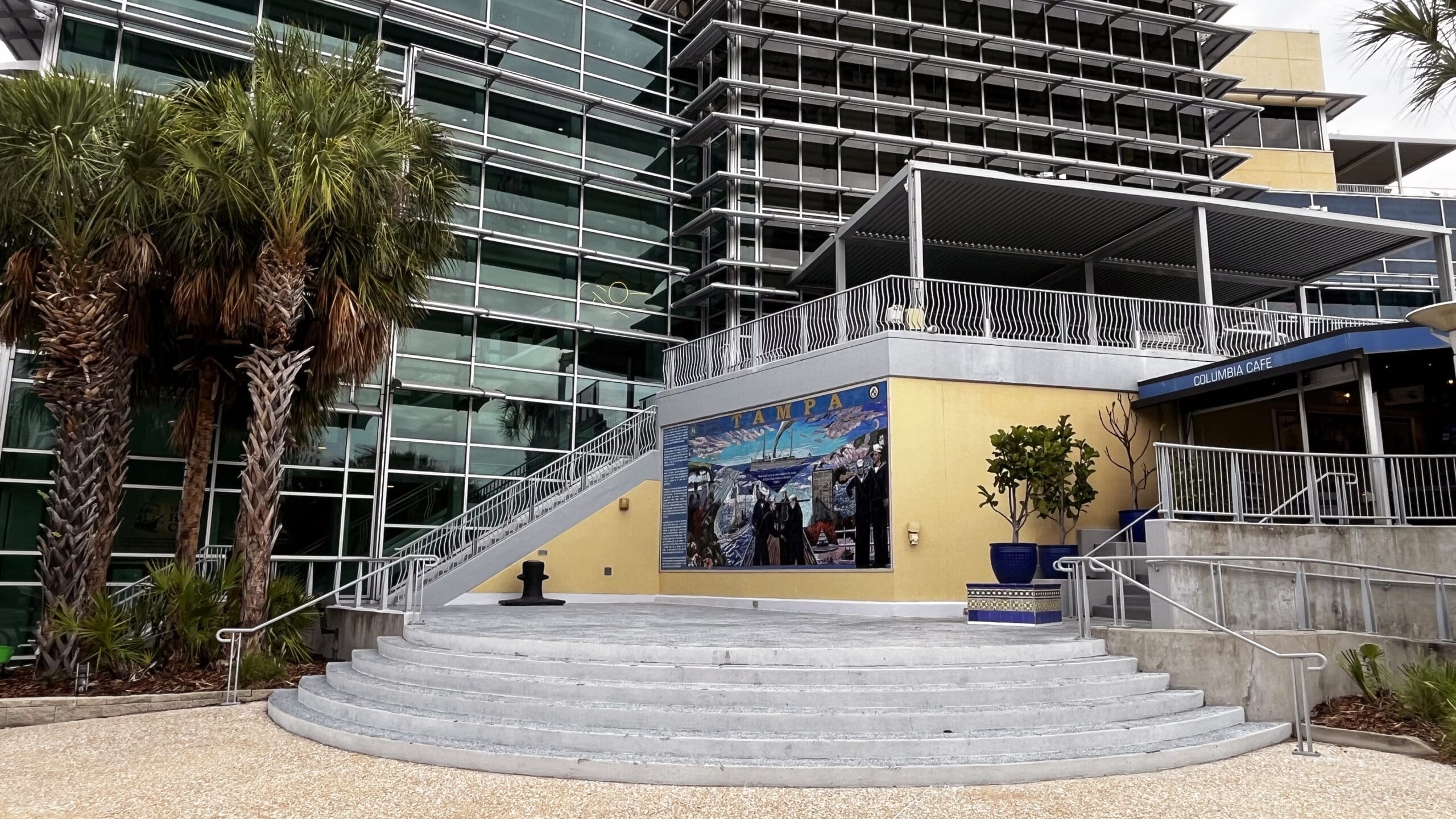
For many, the news brings long-awaited closure more than a century after the cutter was lost. For the Tampa Bay area, it also brings renewed attention to a story remembered just outside the Tampa Bay History Center, where a mosaic mural facing Cotanchobee Fort Brooke Park honors the cutter, her crew and the bond between the ship and this community.
As the mural notes, before she became the Tampa, the cutter was launched Feb. 10, 1912, as the Miami. Her early work included enforcing navigation and fishing laws and assisting mariners. The Miami later became closely associated with Tampa’s Gasparilla celebrations, and official Coast Guard and Navy histories record that she was renamed Tampa in February 1916 in recognition of that connection.
Find out more
Click here to read the original research by Nora L. Chidlow, Coast Guard archivist, and Arlyn Danielson, Coast Guard curator, of the United States Coast Guard Historian’s Office.
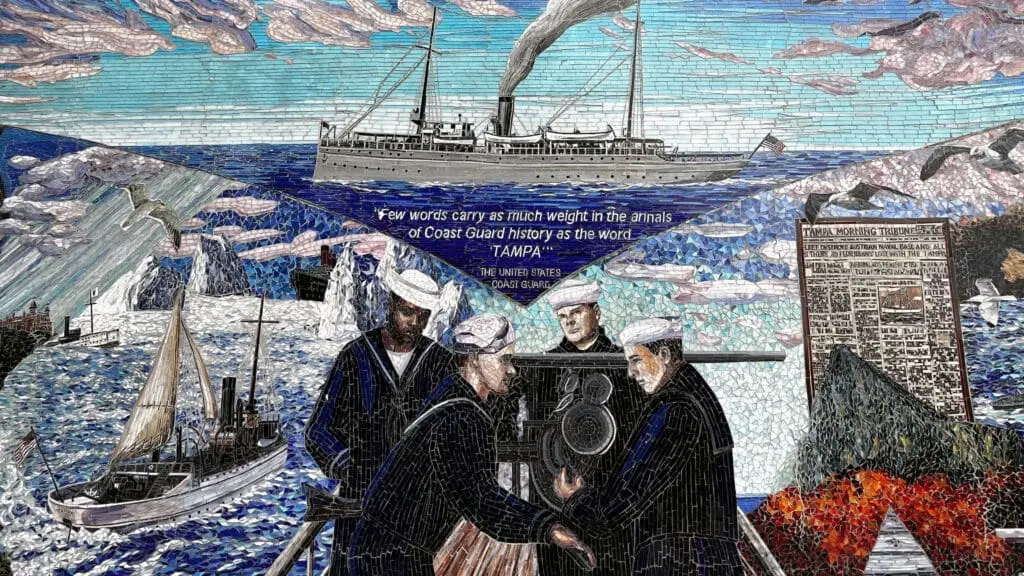
“Heroes of the USCGC Tampa,” a 10.5-by-23-foot glass mosaic mural outside the Tampa Bay History Center, was designed by Carl and Sandra Bryant, funded by the Arts Council of Hillsborough County and dedicated Feb. 5, 2018.
The following text appears on the mural:
“The U.S. Coast Guard Cutter Tampa is a symbol of devotion to country, heroic sacrifice, and the bond between her crew and the Tampa Bay area. Launched February 10, 1912, and originally named the Miami, the ship’s mission included enforcement of navigation and fishing laws and providing aid to mariners.
In 1912, the Miami was invited to participate in the City of Tampa’s Gasparilla Pirate Festival. Decorated by her crew, the Miami was a mainstay of the city’s celebrations. She played this part for each of the next four years, gaining the affection of Tampa’s residents. In 1915, the ship was renamed Tampa in recognition of this bond.
The Tampa’s mission expanded in the aftermath of the sinking of the Titanic. From April through July of each year from 1913 to 1916, the Tampa performed ice patrol duty, locating, charting and reporting the presence of icebergs off the Grand Banks of Newfoundland.
On April 6, 1917, the United States entered World War I, and the Coast Guard was transferred to the Navy for wartime service. The Tampa was refitted with heavy armament and dispatched to Gibraltar. Commanded by Captain Charles Satterlee, the cutter’s objective was protecting Allied convoys from attack by German submarines while on their way to Great Britain. Convoy duty was arduous and perilous, requiring the Tampa to be at sea for fifty percent of her time, sailing an average of 3,666 miles each month.
On September 26, 1918, the Tampa was escorting a convoy to Milford Haven, Wales. As she pulled ahead, the Tampa was attacked and sunk by a German submarine. All hands were lost, 115 Coast Guard and Navy officers and crewmen, 11 members of the Royal British Navy and five British civilians. It was the largest combat loss to the Navy in WWI. It was also a tremendous loss for our community. On board were 24 of our boys (initially reported to be 21), including three sets of brothers and two cousins. For their sacrifice, the Tampa crew was posthumously awarded the Purple Heart in 1999.
This mural is dedicated by the Tampa Bay community to the undying memory of the Tampa and her patriot crew, who died in the full performance of their duties in selfless service to their country.”

About the Author
The Tampa Bay History Center welcomed Billy Somerville as its Director of Marketing and Communications in 2021. Billy leads the History Center’s external communication and content strategy across media channels with over a decade of experience in the...