
The Sport of Kings and Queens: Horse Racing in Tampa Bay

Horse racing, long regarded as the “sport of kings,” was favored by monarchs such as King Charles II of England in the seventeenth century and Queen Anne, who established Royal Ascot in 1711, and the tradition eventually reached Tampa, Fla.
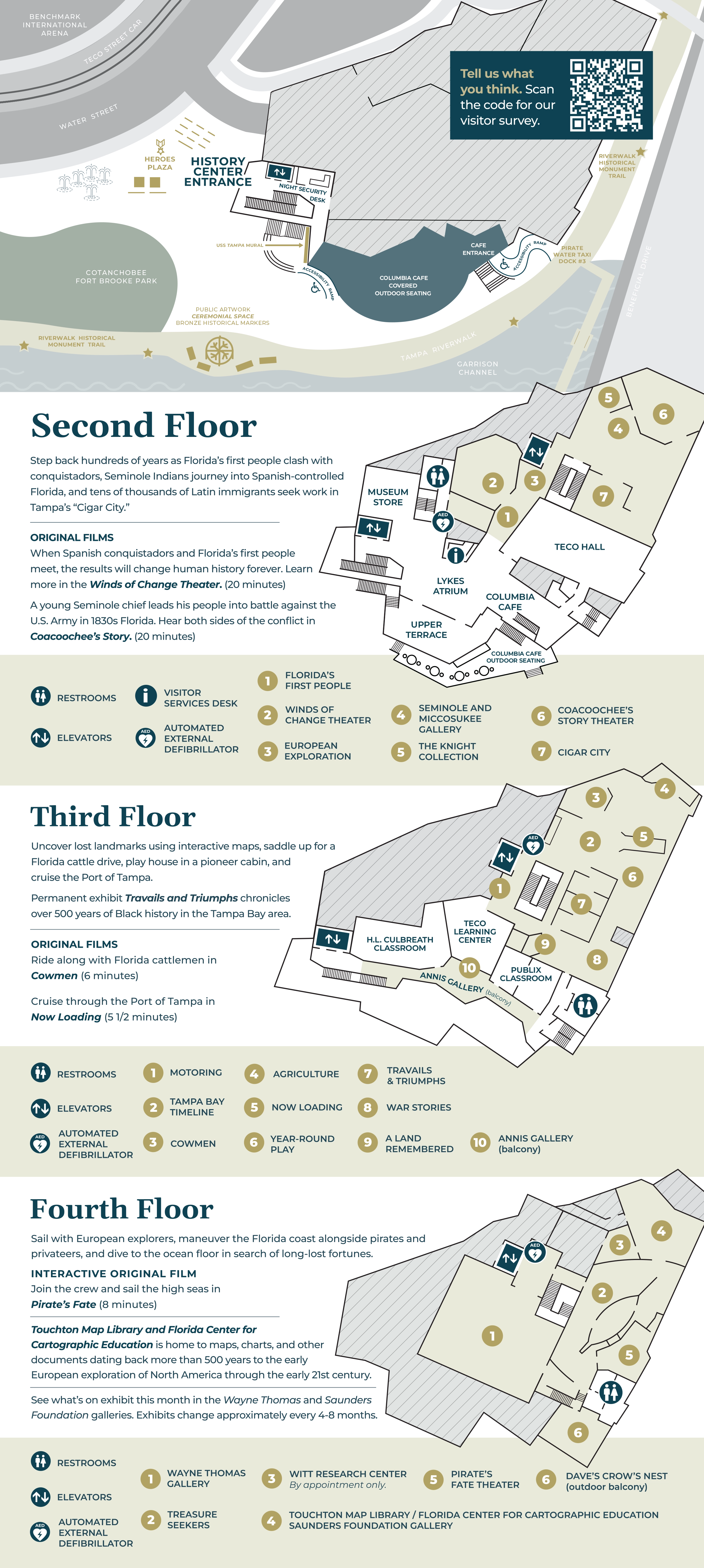
If you are looking for a piece of Florida’s past that combines Florida’s tourism economy, regional growth and legacy, that story comes alive in The Sport of Kings and Queens, a temporary exhibition now on view in the TECO Learning Center, on the third floor of Tampa Bay History Center.
Spanning nearly two hundred years, the exhibition in our gallery explores how horse racing developed alongside the Tampa Bay area. Long before interstates and professional sports franchises, racing offered spectacle, employment, and civic gathering.
In the late nineteenth century, railroad mogul Henry B. Plant built the Tampa Bay Hotel to attract wealthy winter visitors. To entertain them, he added stables and a small racetrack. That decision tied leisure to land, animals, and infrastructure that shape horse racing as we know it today.
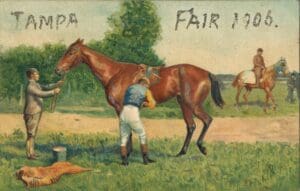
By the early twentieth century, Plant Field had evolved into a half-mile oval with grandstands, hosting fairs and public events that blurred the line between sport and community life. Racing was not yet as popular as it is today. It was something residents and visitors experienced together, something that fit recreationally, suited community members well for jobs, and pastimes.
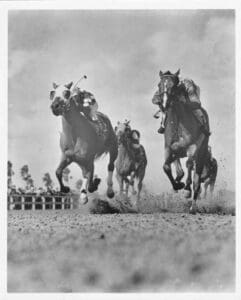
In 1926 with the opening of Sunshine Park in Oldsmar, now known as Tampa Bay Downs, horse racing became more popular. The West Coast Jockey Club built a racetrack designed to hold 20,000 spectators and 1,000 horses, featuring an 80-foot-wide oval and a mission-style clubhouse. Its opening day drew five thousand people, along with celebrities such as Babe Ruth and Jack Dempsey, arriving by special train from Tampa.
Inside the gallery, postcards, tickets, trophies, uniforms and press images chart how Sunshine Park and Tampa Bay Downs were promoted and reported. These objects reveal racing as both labor and leisure. Behind every race day were breeders, trainers, grooms, and agricultural workers, many connected to central Florida’s thoroughbred industry around Ocala. Steady climates and open pasture made year-round training possible, linking rural farms directly to the grandstand.
The exhibition’s context is strengthened through significant loans and partnerships. Artifacts and a film are on loan from the National Racing Museum and Hall of Fame. Archival images come from the Keeneland Library, alongside materials connected to The Heart of the Turf: Racing’s Black Pioneers, which documents the history and legacy of African American jockeys
Personal stories give the exhibition its human scale. Artifacts connected to Julie Krone highlight how women expanded their place in professional racing. Figures such as George Steinbrenner illustrate the role of ownership and investment, while lesser-known families and workers demonstrate how labor and hard work, not just theatrics, sustained the sport through economic shifts and changing public attitudes.
This year marks Tampa Bay Downs hundredth anniversary. Rather than treating that milestone as a celebration in isolation, The Sport of Kings and Queens asks a larger question. Why did racing endure here when tracks elsewhere closed or moved? The answer lies in community support, tourism, and Florida’s broader agricultural network. Today, the horse racing industry contributes more than $3 million annually to the state’s economy, with Tampa Bay Downs playing a central role through tourism, employment, and tax revenue.
This exhibition is designed for more than dedicated racing fans. Visitors interested in local history, urban development, animal culture, or Florida’s tourism economy will find clear timelines and accessible interpretation. Families and first-time museumgoers can follow individual stories while gaining insight into broader patterns that shaped the region.
Now on view in the TECO Learning Center, The Sport of Kings and Queens shares the story of horse racing at the Tampa Bay History Center. It shows how a sport often associated with distant traditions became woven into daily life along Tampa Bay, leaving a legacy that continues to shape the region today.

About the Author
Sara Cheesewright serves as Digital Marketing Associate at the Tampa Bay History Center. She holds a Master of Arts from St. John’s University and brings more than five years of editorial expertise to her work. As a lifelong storyteller, she is deeply...