Stories of Florida’s fishing culture: The Lure of Florida Fishing

From little-known Tampa Bay fishing maps to pier fishing, bamboo rods, and legendary anglers, The Lure of Florida Fishing offers a vivid look into the past.
Every fisherman has a secret. In Florida, many of those secrets ended up on paper. Hand-drawn maps with cryptic marks, arrows, and notes such as “snook here” or “clam bank” guided anglers to guarded waters. Some of these maps were exchanged among friends, others sold in tackle shops, and a few were created by outdoorsmen like Tampa Bay’s Rube Allyn.
In the 1950s, Allyn produced fishing maps that served as both practical guides and personal records. Today, those fragile documents are preserved in the Touchton Map Library and are on display for the first time.
The Lure of Florida Fishing opened Aug. 23, 2025, in the Wayne Thomas Gallery at the Tampa Bay History Center. The exhibition remains on view through Jan. 11, 2026, and traces a century of angling traditions, technological advances, and artistry that surrounded Florida’s fishing culture.
Objects on view range from practical equipment to works of art. Fifty-nine handcrafted lures designed in Tampa Bay illustrate the region’s role in lure innovation. Brightly painted jigs, reels, steel hooks, and tournament trophies round out the tackle of the 20th century. Visitors will also find carved frame fish sculptures by Conrad Brayman and a rediscovered collection of 22 paintings by Southern artist William Aiken Walker. Packed away for the 1933 Chicago World’s Fair and then forgotten, Walker’s canvases capture tarpon, grouper, and Spanish mackerel in vivid detail.
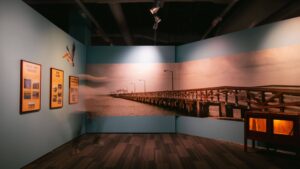
The exhibition places these objects within the broader story of Florida’s sport fishing culture. After World War I, travelers arrived by automobile and filled motor camps, hotels, and piers. Ballast Point in Tampa became one of many waterfront stages where fishing was celebrated as both a pastime and a spectacle. By the 1930s, angling clubs organized tournaments and published record books. To highlight this local story, the History Center has added a custom mural of Ballast Point, offering an immediate visual connection to the place where Tampa’s fishing culture took shape.
Florida waters drew everyday enthusiasts as well as famous figures. The Lure of Florida Fishing highlights how the emergence of sport fishing clubs, guides, techniques, tackle, and tournaments in the 20th century helped define Florida as a destination for both recreational anglers and cultural icons, including Ernest Hemingway, Ted Williams, and President Dwight D. Eisenhower. Meanwhile, rods and reels advanced quickly: bamboo fly rods gave way to linen-line tackle in the 1930s, fiberglass rods appeared in the 1940s, and sturdier gear expanded the boundaries of the sport.

Florida’s fishing traditions reflect both ingenuity and community. From handmade lures and detailed maps to paintings that captured the thrill of the catch, each piece tells a story about how anglers connected with the water and with one another. That heritage continues today, as recreational fishing remains part of life across Tampa Bay and throughout the state.
The Lure of Florida Fishing brings together lures, maps, and artwork that showcase the creativity and passion of generations of anglers, reminding us how fishing has shaped Florida’s identity and why the sport still matters today.
Fishing enthusiasts, history buffs, and Tampa Bay locals have all called this exhibit a favorite. Don’t miss this chance to experience Florida’s fishing legacy up close. Join us for our latest Lure of Florida fishing event:
Florida Conversations: Stories of Florida’s Fishing Culture
This event takes place on November 19 @ 12:00 pm – 1:30 pm in TECO Hall or online. Hear from panelists with Florida Fish and Wildlife and Florida Folklore as they share stories of Florida fishing culture.
Plan your visit and get your tickets now at the Tampa Bay History Center.

About the Author
Sara Cheesewright serves as Digital Marketing Associate at the Tampa Bay History Center. She holds a Master of Arts from St. John’s University and brings more than five years of editorial expertise to her work. As a lifelong storyteller, she is deeply...